
Microsoft has become the first global Big Tech company to join the Open Network for Digital Commerce (ONDC), an Indian government initiative for developing a first-of-its-kind open network for digital commerce. The world's second-largest technology firm intends to introduce social e-commerce via its app in the Indian market later this year. ONDC is expected to open to the public in Bengaluru over the next fortnight as it enters into the next phase of the pilot for further fine-tuning before rollouts in other cities, according to a source in the know.

Does the Galaxy M20 have the features and performance needed to take its competitors?
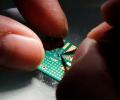
Foundries in Taiwan account for more than 75 per cent of the chips that mobile devices made in India need, according to estimates by the Indian Cellular and Electronics Association (ICEA), which represents global and domestic manufacturers. The number is slightly lower, 60 per cent, if one considers all chips -- those of consumer electronics, PCs, laptops, autos, etc. This ties in with the fact that foundries in Taiwan, led by TSMC, account for over 70 per cent of the world's microchip supply, according to estimates by Gartner.

Apple and Samsung are international players and should work as a team with domestic companies to transform India into a global powerhouse: IT Minister Ravi Shankar Prasad.

Starting with a family, which had a dealership of Bajaj Auto's scooters, to becoming the owner of a household name in consumer appliances who could afford to have Bollywood superstar Shah Rukh Khan as the brand ambassador, Venugopal Dhoot's is a story of an aggressive small town businessman's pursuit to be on the top. Now arrested in connection with the ICICI Bank loan fraud case, Venugopal Dhoot during his heydays was not the one to simply sit on small achievements like Videocon becoming the largest television set manufacturer in India.

The list of guests included celebrities from across the globe, politicians, the who's who of Hindi and south Indian cinema world and almost all the top cricketers of the country.

With consumers staying indoors and e-commerce firms extending their reach to a larger number of pin codes, these giants have snatched a larger share from the offline traders this season.

LG, Samsung, Videocon, Sony and Panasonic have instructed their trade partners that products sold through online marketplaces without their knowledge during flash sales will not get the benefit of after-sale service and warranties.

This festive season is expected to be a happy one for consumer durables companies, with most expecting to clock a sales growth of 40 per cent - double the amount achieved last year.
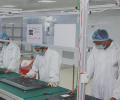
The stock of Dixon Technologies (India), the country's largest listed electronic manufacturing services (EMS) player, was up 6 per cent in 10 trading sessions, boosting the gains over the last three months to 21 per cent. The gains came following reports that Dixon will produce laptops in India in partnership with US and Chinese firms under the production-linked investment (PLI) scheme. It recently signed an agreement to make smartphones for Xiaomi India.

The battle for subscribers in the direct-to-home (DTH) market is hotting up with Reliance Communications (RCom) close to finalising a bulk deal with the country's leading TV manufacturers -- LG Electronics, Samsung India and Sanyo -- which will be offered to customers at a hefty discount bundled with a DTH package.

The industry is expecting double-digit growth on a year-on-year basis, helped by a possible price correction after softening of raw material inputs and factors such as positive sentiments, pent up demand and improving economic conditions. Besides, a shift in consumer behaviour from price consciousness towards technologically advanced premium products with quality, value proposition and safety aspects leading to a rise in demand for home automation products is making the industry upbeat. With the government's production linked incentive (PLI) scheme for white goods, which has witnessed a committed investment of Rs 4,614 crore, in place, many manufacturers are gearing up to make the most out of the opportunity as well as take steps towards reducing their dependency on imports and make products more affordable.

The government on Thursday tweaked curbs on imports of laptops and computers as it allowed importers to bring in shipments of IT hardware from overseas on a mere 'authorisation' upon detailing quantity and value. The new 'import management system' is aimed at monitoring shipments of laptops, tablets and computers into the country without hurting market supply or creating a cumbersome licensing regime. The announcement is likely to provide relief to companies in the IT hardware segment in India as they had flagged concerns over the imposition of a strict licensing regime for importers.

E-commerce major Amazon will host Prime Day - its annual sale event - in India on July 15-16. The company will launch over 45,000 products from over 400 Indian and global brands. The announcement of the Prime Day event in India comes at a time when 900 workers at Amazon UK plan to strike for three days (July 11-13).

The US tech major is planning to begin local production of its upcoming iPhone 12 by next April - within six months of its launch.

Is self-reliance the right approach in a mega-buck game, or better to be part of a network? asks T N Ninan.

Google is followed by Sony India who won the runner-up position.

The telecom regulator on Friday released a list of 40 "defaulter" principal entities, including large banks like HDFC Bank, SBI and ICICI Bank, that are not fulfilling the regulatory norms on bulk commercial messages despite repeated reminders. Hardening its stance on the issue, the Telecom Regulatory Authority of India (TRAI) warned that defaulting entities should comply with the stipulated requirements by March 31, 2021 "to avoid any disruption in the communication with customers" from April 1, 2021. "As sufficient opportunity has been given to principal entities/ telemarketers to comply with the regulatory requirements and that the consumers cannot be deprived of the benefits of the regulatory provisions any further, therefore it has been decided that from April 1, 2021, any message failing in the scrubbing process due to non-compliance of regulatory requirements will be rejected" by the system, TRAI said in a statement.

India has become world's 2nd largest mobile phone: Modi

'Whoever owns the best chip industry will be the Saudi Arabia of the era of data,' predicts Rajeev Srinivasan.

'You have to be a total anti-national bozo to shut down the Nokia plant in Sriperumbudur, which was the first large manufacturing plant for mobile phones in India.' 'Why was the unit shut down? Because of somebody's ego.'

The government is likely to extend fiscal incentives for production of toys, bicycles and leather and footwear in the forthcoming budget as it looks to expand production linked incentive (PLI) scheme to cover more high-employment potential sectors, sources said. The government has already rolled out the scheme with an outlay of about Rs 2 lakh crore for as many as 14 sectors, including automobiles and auto components, white goods, pharma, textiles, food products, high efficiency solar PV modules, advance chemistry cell and speciality steel. The scheme aims to make domestic manufacturing globally competitive and create global champions in manufacturing, and it is yielding solid results, sources said.

As the rupee continues its freefall against the dollar, cars, TVs, washing machines and other home appliances are set to cost more with companies set to hike prices to offset impact on their margins.

Chinese mobile brands are deeply entrenched in the Indian market. A move to bar them may send a bold diplomatic message. But its cost for the local industry is anybody's guess. In the event that Chinese brands face curbs, two handset makers - Samsung and Apple - squarely stand to gain.
India has been able to attract 40 global smartphone makers to the country -- creating at least 50,000 jobs. But GST could hurt that, discovers Ayan Pramanik.

The finance ministry is looking at a reworked proposal from mobile device makers on how to fight the rampant and growing smuggling of very high end phones. The proposal suggests reducing the basic customs duty (BCD) on phones which have a CIF (cost, insurance and freight or price at landing in the port) value of over Rs 35,000-Rs 40,000. The retail value of these phones is upwards of Rs 70,000.

Young consumers said that Oppo's constant focus on camera prowess and its long-lasting batteries remained at the top of their mind
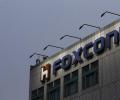
They are both electronic manufacturing services (EMS) companies, also known as contract manufacturers. One is Taiwan's Foxconn group, the undisputed global number one in this business with revenues of $223 billion. The other is Dixon Technologies, the biggest domestic player with revenues of over Rs 10,500 crore.

The government on Monday extended the period of production-linked incentive scheme for large-scale electronics manufacturing with a focus on mobile phones by a year until 2025-26. The base year of the scheme 2019-20 remains the same but the companies will have the option to choose their five-year period either from the base year or the year 2020-21 for calculation of the incentives under the scheme. "Now we have extended the tenure of the scheme from 2020-21 to 2025-26. "Earlier, it would have ended in 2024-25.

Apple was a fringe player in all key categories like smartphones, notebooks, and tablets till recently. But with the last quarter's record-breaking performance, the brand has established itself in the country's price-sensitive consumer electronics market.

The apex court has settled the long-pending dispute between companies such as Samsung, IBM, HP & others and the tax department.

Apart from bringing new suppliers on board, Xiaomi is also hoping to take advantage of the newly launched PLI scheme that offers incentives on incremental production of smartphones with 2020 as the base year.

After 2014, our growth has been average of around 5%. If this continues, we will remain here like Egypt, Brazil, South Africa and Bangladesh, points out Aakar Patel.

Top companies across sectors -- automobile maker Maruti Suzuki, consumer electronics giant Samsung to IT giant Infosys -- have reopened factories and offices as India took its first steps towards resuming economic activity after weeks under a near-total coronavirus lockdown.

'Last year we sold 18 million phones in India, this year we should do 23-24 million, and next year our target is to hit 40 million.'

Indian plants -- who plan to begin production with 28 nano metre chips -- will take two to four years to get off the ground. By that time, in the fast changing world of chip making, the global market would have shifted to 22 nm.

From auto, refrigerator, and mobile handset makers to real estate firms, companies are tying up with banks to dole out attractive finance schemes and discounts to make buying more affordable.

The government will undertake a detailed evaluation of applications it has received in response to the mega semiconductor scheme and expects to complete the entire process and sign agreements with companies in next 8-10 months, according to Union Minister for Electronics and IT Ashwini Vaishnaw. Vaishnaw said he is happy with the response that came in within a short period of time, when the ministry invited applications under the Rs 76,000 crore semiconductor programme. The government is confident of seeing one of the big global players in semiconductor industry coming in the next round, Vaishnaw told PTI in an interview. He asserted that many other players too are "seriously evaluating" India's semiconductor programme, and that the ministry is in discussions with several companies.

What is driving the digital-first approach of traditional, legacy brands? Apart from the growing adoption of the internet in the country, brands are drawn to the agility of the medium.

Companies are innovating with tech tools to ensure that you spend less time at the cash counter.
 © 2026 Rediff.com - Advertise with us - Disclaimer - Privacy Policy - Sitemap - Feedback - About us - Terms of use - Grievances